
Managing Refugee Crisis in Southeast Asia: Policies, Practices and Challenges – Mohammad Hasan Ansori, Johari Efendi, Wirya Adiwena
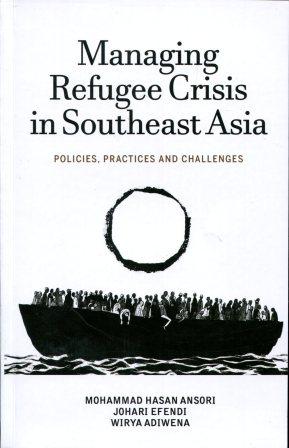
Author: Mohammad Hasan Ansori, Johari Efendi, Wirya Adiwena
Publisher: THE HABIBIE CENTER
Year of Publication: 2017
Print Length: 144 pages
Genre: Non-Fiction / Migration & Refugee Studies
Area: Association of Southeast Asian Nations, Indonesia, Malaysia, Southeast Asia, Thailand
Topic: Challenges & Opportunities, Civil Society Organization (CSO), Legality & Illegality, Migrants, Policy & Practice, Refugee Crisis, Refugee Management/Governance, Refugees & Forced Migration, Regionalism
This book was published in collaboration with The Sasakawa Peace Foundation as a response to the 2015 Rohingya maritime crisis. It provides a detailed account of the specific domestic legal exceptions, constraints, and best practices across the region’s primary transit and destination countries.
The text offers an in-depth empirical analysis of how humanitarianism intersects with state sovereignty in the ASEAN region. It explicitly focuses on three core countries that handle the majority of maritime refugee arrivals: Indonesia, Malaysia and Thailand.
Since none of these three nations are signatories to the 1951 Refugee Convention, refugees are legally classified as irregular migrants. The book describes how these states rely on discretionary, ad-hoc humanitarian exceptions to manage displacement rather than established legal rights frameworks.
Table of Contents
Acknowledgements
Foreword
List of Acronym and Abbreviation
CHAPTER I: INTRODUCTION
A. Problem Statement
B. Research Purpose
C. Methodology
CHAPTER II: MALAYSIA
A. Dynamic and Condition of Refugees
B. Legal Framework
C. Issues and Challenges
D. Practices and Policies
E. CSO Participation
CHAPTER III: THAILAND
A. Dynamic and Condition of Refugees
B. Legal Framework
C. Issues and Challenges
D. Practice and Policies
E. CSO Participation
CHAPTER IV: INDONESIA
A. Dynamic and Condition of Refugees
B. Legal Framework
C. Policies and Practices
D. CSO Participation
CHAPTER V: ASEAN AND THE REFUGEE CRISIS IN THE REGION
A. ASEAN, Regional Framework and the Dynamic of Addressing the Refugee Crisis in the Region
B. The Role of ASEAN in Addressing Refugee Crisis in the Region: Practices and Challenges
C. ASEAN and Addressing the Refugee Crisis in the Region: Opportunities and Assets
CHAPTER VI: CONCLUSION AND RECOMMENDATION
A. Conclusion
B. Recommendations
Bibliography
About the Researchers